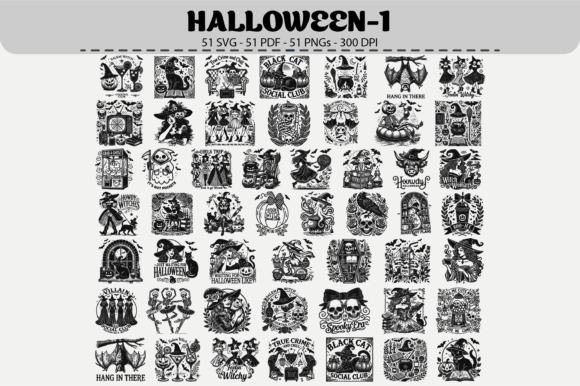
Halloween Vector Clipart – 51 Designs
As a designer who spends more time staring at stitch density charts and fabric swatches than sleeping, I have learned to be incredibly skeptical of digital assets. The market is flooded with "cute" clipart that looks charming on a screen but falls apart completely when pushed through an embroidery machine. That is why I approach every new batch of Halloween Vector Clipart – 51 Designs with a critical eye. I am not just looking for pretty pictures; I am looking for viable machine embroidery design opportunities that can withstand the rigors of production, frequent washing, and customer expectations.
This collection is marketed as a set of Illustrations and Graphics, which initially raises a red flag for many embroiderers. Vector art often contains complex gradients or tiny details that do not translate well into thread. However, after reviewing the specific aesthetic of these black and white Halloween-themed illustrations—featuring witches, skeletons, and classic spooky motifs—I found this pack to be surprisingly practical for real-world application. It sits in that sweet spot between artistic flair and manufacturing feasibility.
The First Impression: Mood and Visual Personality
When you first load these files, the immediate takeaway is the boldness of the line work. Because these are black and white vector illustrations, they possess a high-contrast clarity that is essential for embroidery. There is no gray area here, which means there is less ambiguity when digitizing. The mood is playful yet distinctly seasonal. It avoids the overly childish look that plagues so many holiday designs, making it versatile enough for both personalized gift markets and serious boutique branding.
The visual personality of the Halloween Vector Clipart – 51 Designs leans heavily into traditional iconography. You see the classic broomsticks, grinning skulls, and whimsical witches. For a small business owner or Etsy seller, this familiarity is a feature, not a bug. Customers recognize these symbols instantly. When a buyer sees a skeleton holding a pumpkin on a tote bag, they know exactly what they are getting. This recognition factor builds trust and reduces hesitation at checkout. The designs feel cohesive, suggesting they were curated with a unified style in mind, which helps maintain brand consistency across a product line.
Real-World Application: From Screen to Stitch
Let’s talk about how this actually performs on the hoop. I recently evaluated these concepts while preparing a custom order for a client who wanted a set of matching aprons for a Halloween party favor business. The challenge with apron embroidery is balancing detail with durability. If the design is too dense, the fabric pucks. If it is too sparse, it looks unfinished.
The Halloween Vector Clipart – 51 Designs proved to be an excellent candidate for custom apparel like these aprons. The clean lines allowed for crisp satin stitch outlines, while the larger solid areas could be filled with efficient fill stitch. I also considered using these for sweatshirt embroidery. On heavy cotton fleece, the contrast of dark thread against a light graphic (or vice versa) holds up beautifully. The shapes are robust enough to survive the tension of the hooping process without distorting.
Another strong use case is embroidered patch creation. Many crafters use these types of vector packs to create iron-on patches for denim jackets or backpacks. The distinct separation between elements in these graphics makes them ideal for applique techniques. You can easily cut out the background shape and stitch around the main figure, creating a layered, professional look that elevates a simple handmade product into something that feels premium. For Etsy sellers, this versatility is key. One design file can be adapted for a cap, a pillow cover, or a kitchen towel, maximizing the return on your digital asset investment.
Where Caution Is Required
No design is perfect, and honest review requires pointing out where things might go wrong. While Halloween Vector Clipart – 51 Designs is generally robust, there are specific scenarios where you need to proceed with care.
- Small Hoop Sizes: Some of the intricate details within the witch hats or skeleton ribs may become muddy if you try to shrink the design down to fit a tiny 4x4 inch hoop. Always check the minimum recommended size before committing to a small project like a baby onesie or a delicate handkerchief.
- Textured Fabrics: If you are working with bouclé, heavy tweed, or nubby linen, the fine lines of the vector art might get lost. The fabric texture competes with the stitch definition. For these materials, stick to the bolder, simpler icons from the pack.
- Stretchy Fabrics: When embroidering on stretchy knits or jersey, especially on curved surfaces like caps, the design needs to be stabilized properly. Complex vector shapes can warp if the stabilizer isn't heavy-duty enough. I recommend using a cut-away stabilizer for any stretchy fabric application to ensure the garment returns to its original shape after washing.
- Dense Stitch Areas: Be mindful of the stitch density. If the vector art has overlapping elements that would require excessive layering of thread, the resulting fabric weight might become stiff and uncomfortable. This is particularly relevant for items that will be worn close to the skin, such as baby embroidery projects. In these cases, simplifying the design by removing minor decorative accents is often a wise move.
Practical Designer Notes for Production
Before you start running production runs, there are several technical steps every professional should take. First, always test the design on scrap fabric that matches your final product in weight and composition. This reveals issues with puckering or thread breakage early.
Pay close attention to thread colors. Since these are black and white vectors, you have freedom in color choice, but contrast is king. A light yellow skeleton on a white shirt will disappear. A dark navy skeleton on a black shirt will vanish. Use black and white mockups during your planning phase to ensure visibility. Also, inspect small details closely. Sometimes, what looks like a single line in the vector software splits into multiple paths when digitized, causing unnecessary trimming and potential misalignment.
Furthermore, consider the end-user experience. If this is for a commercial embroidery project intended for sale, think about washability. Harsh washing cycles can fray loose threads, especially in detailed areas. Ensuring your underlay stitches are secure will protect the integrity of the finished product. Finally, verify licensing terms. Even though these are described as graphics and illustrations, commercial use rights vary. Confirm whether you are allowed to sell finished physical items made from these designs, or if the license is restricted to personal use only. This protects your reputation and your legal standing.
Final Verdict
Overall, Halloween Vector Clipart – 51 Designs is a solid addition to any embroiderer's library. It offers a blend of recognizable themes and clean geometry that translates well to thread. Whether you are creating holiday embroidery gifts, stocking your shop with small shop product inventory, or designing unique design assets for clients, this pack provides reliable value. It respects the constraints of the medium while delivering the visual punch needed to capture attention. Just remember to respect the fabric, choose your stabilizer wisely, and always prioritize clarity over clutter. When done right, these designs don't just sit on the fabric; they enhance the story of your handmade creation.